
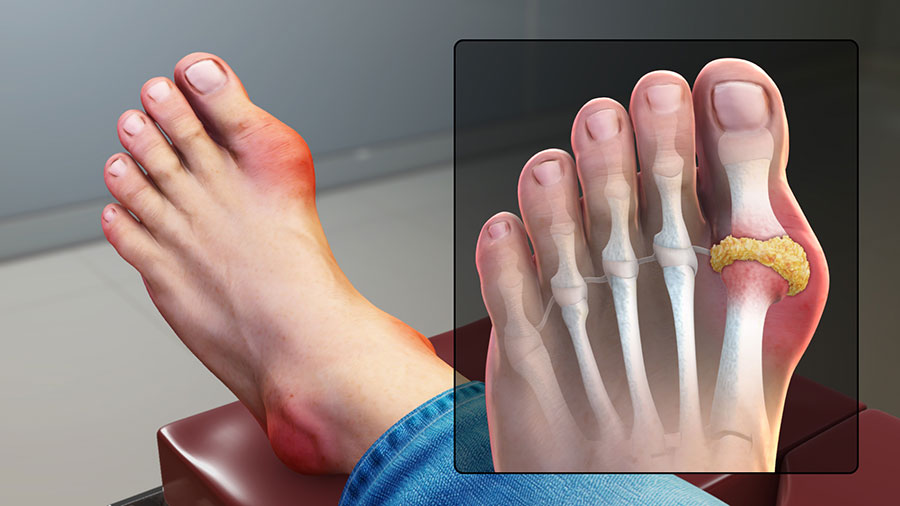
Gout is a form of arthritis caused by a buildup of uric acid crystals in a joint — most often the big toe. It strikes suddenly, frequently at night, with intense pain, redness, warmth, and swelling that can make even a bedsheet feel unbearable. Without management, attacks tend to return and can damage the joint over time.
At Premier Lower Limb Clinic in Jersey City, Dr. Ibrahim Elkattawy relieves acute gout flares and helps you reduce the frequency of future attacks.
Request an AppointmentSymptoms of a Gout Attack
- Sudden, severe pain in the big toe or another joint, often overnight
- Redness, warmth, and significant swelling
- Extreme tenderness — even light pressure hurts
- Lingering discomfort and stiffness after the worst pain passes
What Triggers Gout
Gout flares when uric acid levels rise and form crystals in a joint. Diet (red meat, shellfish, alcohol, and sugary drinks), dehydration, certain medications, genetics, and other health conditions can all play a role. Identifying your triggers is a key part of preventing repeat attacks.
Because gout commonly affects the big toe joint, it can sometimes be confused with conditions that require bunion treatment.
How We Help
- Prompt evaluation and treatment to calm an acute flare
- Confirming the diagnosis and ruling out infection or other causes
- Guidance on diet, hydration, and triggers to reduce future attacks
- Coordination on long-term uric-acid management when appropriate
- Footwear and protection to keep pressure off the affected joint
We provide comprehensive podiatry services and personalized care from Dr. Elkattawy.
Frequently Asked Questions
How fast can you treat a gout flare?
We offer same-day appointments when available, which matters because early treatment can shorten a painful flare.
Is the big toe the only joint gout affects?
No, but it’s the most common. Gout can also affect the midfoot, ankle, knee, and other joints.
Can diet really reduce my attacks?
Yes. Limiting common triggers like red meat, shellfish, alcohol, and sugary drinks, and staying hydrated, can lower how often flares occur.
How do you know it’s gout and not an infection?
Several conditions can mimic gout. Dr. Elkattawy evaluates the joint carefully to confirm the diagnosis before treatment.
Will gout damage my joint?
Repeated, untreated attacks can damage the joint over time, which is why management between flares is important.
Do you accept insurance?
Yes, we accept most major insurance plans and will check your coverage.




