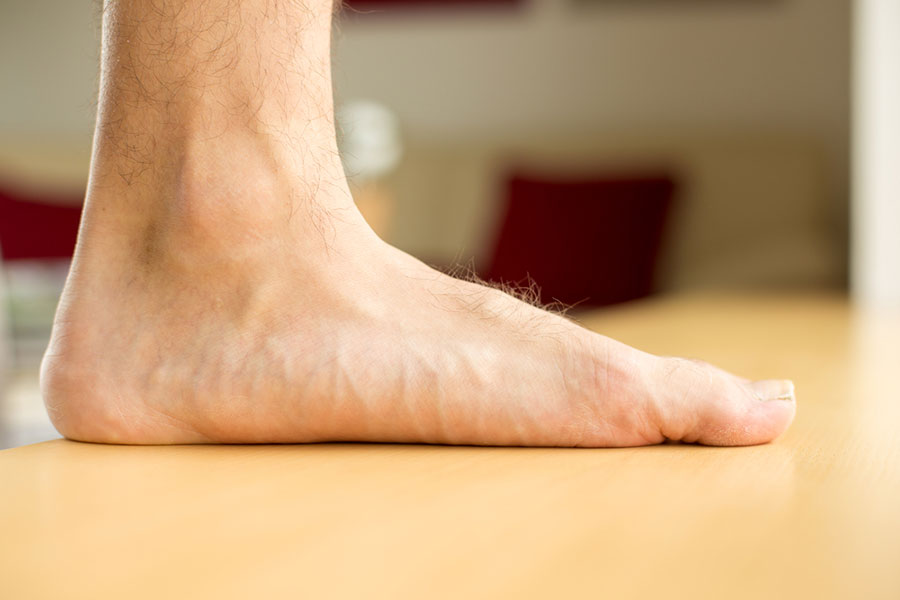
Flat feet (fallen arches) occur when the arch of the foot collapses, so the sole sits closer to the ground. Many people have flat feet without pain, but for others it leads to aching arches, tired feet, and strain that travels up to the ankles, knees, hips, and lower back.
At Premier Lower Limb Clinic in Jersey City, Dr. Ibrahim Elkattawy evaluates how your flat feet affect your whole-body mechanics and relieves the pain — most often with custom orthotics and targeted conservative care.
Request an AppointmentSymptoms of Problematic Flat Feet
- Aching or fatigue in the arch or heel, especially after standing or activity
- Swelling along the inside of the ankle
- Pain that spreads to the knees, hips, or lower back
- Shoes that wear unevenly or feet that roll inward
Many patients with fallen arches also experience heel pain due to altered foot mechanics.
What Causes Fallen Arches
Flat feet can be inherited, or they can develop over time from weakened tendons (especially the posterior tibial tendon), injury, arthritis, pregnancy, or aging. Identifying the cause matters, because adult-acquired flatfoot can progress if the underlying tendon problem isn’t addressed.
How We Treat Flat Feet
- Custom orthotics to support the arch and correct mechanics
- Supportive footwear recommendations
- Stretching and strengthening guidance for the supporting tendons
- Bracing or advanced treatment for progressive or painful cases
For younger patients, we also offer evaluation through our pediatric podiatry services.
Frequently Asked Questions
Do flat feet always need treatment?
No. If your flat feet don’t cause pain or problems, treatment may not be necessary. We focus on flat feet that cause symptoms or are progressing.
Can orthotics really help?
Yes. Custom orthotics support the arch and improve mechanics, which often relieves arch, ankle, knee, and back pain related to flat feet.
Why do my knees and back hurt from flat feet?
When the arch collapses, it changes alignment up the leg, putting extra strain on the ankles, knees, hips, and lower back.
Can flat feet develop in adulthood?
Yes. Adult-acquired flatfoot often comes from a weakening tendon and can worsen over time, so an evaluation is worthwhile if your arches are dropping.
Are custom orthotics covered by insurance?
Coverage varies by plan. We accept most major insurance and will check your orthotic benefit.
Do children with flat feet need to be seen?
Many children have flexible flat feet that are normal. If there’s pain or difficulty with activity, an evaluation is a good idea.




