
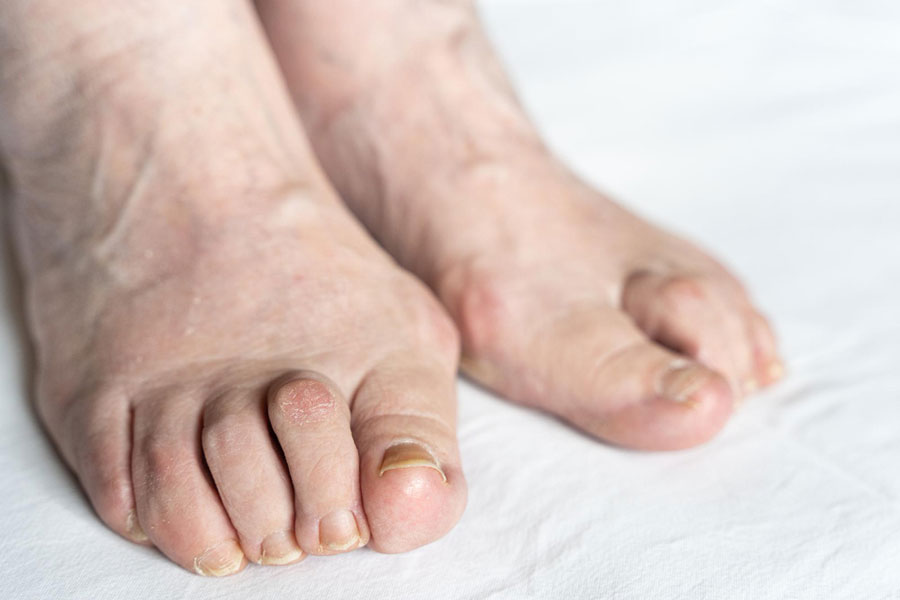
A painful bunion doesn’t have to be a permanent part of your life. Whether you’re experiencing mild discomfort or severe pain that’s affecting your daily activities, there are proven treatments—both surgical and non-surgical—that can help you walk without pain again.
At Premier Lower Limb Clinic in Jersey City, Dr. Ibrahim Elkattawy specializes in treating bunions using the most effective approach for your specific situation. If your bunion has stopped you from wearing shoes you love, running, or simply walking comfortably, it’s time to get relief.
Request an AppointmentWhat Is a Bunion?
A bunion is a bony bump that forms at the base of your big toe, where the big toe meets the foot. More precisely, it’s a deformity where the big toe joint becomes misaligned, the bone at the base shifts outward, and a prominent bump forms on the side of the foot.
Bunions develop due to a combination of factors:
- Genetic predisposition: If your parents or grandparents had bunions, you’re more likely to develop one
- Tight or restrictive footwear: High heels and narrow shoes contribute to bunion formation
- Foot mechanics: Flat feet or poor foot alignment increase bunion risk
- Age: Bunions develop gradually over time and become more common with age
- Inflammatory conditions: Arthritis can accelerate bunion formation
Bunion Symptoms: When Should You Seek Treatment?
You might need bunion treatment if you experience:
- Visible bump on the side of your big toe that’s getting larger
- Pain at the bunion joint, especially when walking or wearing shoes
- Difficulty finding shoes that fit comfortably
- Redness and swelling around the bunion
- Secondary toe problems (your big toe pushing other toes out of alignment)
- A bump that’s affecting your ability to walk or exercise
- Pain even with well-fitting shoes
- Secondary joint pain (other toes, foot, knee)
Early treatment often prevents the bunion from getting worse and can stop pain before it becomes severe.
Non-Surgical Bunion Treatment
Not all bunions require surgery. Many patients find relief through conservative treatment, especially if caught early. Dr. Elkattawy will first explore non-surgical options:
Custom Orthotics
Custom shoe inserts support your foot’s natural arch and alignment, reducing stress on the bunion joint. This slows progression and often reduces pain significantly.
Footwear Changes
Wear shoes with a wide toe box to reduce pressure on the bunion. Choose low heels (1 inch or less) and avoid tight, narrow shoes.
Padding & Cushioning
Special bunion pads and cushions reduce friction and pressure when wearing shoes, providing immediate relief.
Anti-Inflammatory Medication
Over-the-counter NSAIDs (ibuprofen, naproxen) reduce swelling and pain. Dr. Elkattawy may recommend specific dosages or prescribe stronger options if needed.
Ice Therapy
Applying ice for 15-20 minutes several times a day reduces inflammation and pain, especially after activity.
Activity Modification
Avoid activities that aggravate the bunion. If running causes pain, switch to low-impact activities like swimming or cycling.
Stretching & Exercise
Specific stretches and strengthening exercises improve flexibility and reduce stress on the bunion joint.
Timeline: Most patients see improvement within 4-8 weeks. Results continue to improve over 2-3 months.
Success rate: About 40-50% of patients find adequate relief with non-surgical treatment alone.
Patients experiencing related foot conditions may also benefit from treatment for heel pain, plantar fasciitis, or evaluation by a podiatrist.
When Bunion Surgery Becomes Necessary
Conservative treatment doesn’t work for everyone. You might be a candidate for bunion surgery if:
- Conservative treatment hasn’t reduced pain after 2-3 months of consistent effort
- The bunion is progressing rapidly despite treatment
- Pain is significantly affecting your daily life, work, or activities
- The bunion is causing secondary problems with other toes
- You’ve decided that living with the pain is no longer acceptable
Bunion Surgery Procedure
Dr. Elkattawy uses modern surgical techniques to correct bunion deformity. The goal is to realign the big toe joint, remove the bony bump, and restore normal foot mechanics. Most bunion surgeries are minimally invasive, meaning smaller incisions and faster recovery.
What happens during surgery: The procedure typically takes 30-45 minutes. Dr. Elkattawy makes small incisions, realigns the bones, and removes the bony bump. The joint is stabilized using pins, screws, or other fixation methods. Most patients go home the same day.
Recovery Timeline After Bunion Surgery
Week 1-2: Immediate Post-Op
You’ll be on crutches with your foot elevated. Pain is significant but controlled with medication. Swelling is at its peak. Follow-up visit around day 10 to remove stitches. You’ll wear a protective boot to protect the surgical site.
Week 2-4: Early Healing
Gradual transition from crutches to walking. Swelling decreases significantly. Pain decreases as you heal. Physical therapy begins to restore mobility and strength.
Week 4-8: Progressive Activity
You’ll gradually return to normal walking and light activity. Physical therapy continues. Swelling continues to decrease. Most people return to normal shoes by 6-8 weeks.
Week 8-12: Full Recovery
Most people resume all normal activities. Swelling may persist but typically doesn’t affect function. You can return to running, sports, and other activities as comfort allows.
Full healing timeline: 3-6 months. While you feel recovered after 8-12 weeks, the bone continues to heal and stabilize.
What to Expect: Pain, Swelling, and Recovery
Pain Management
Immediate post-op pain is significant but controlled with prescribed medication. Pain decreases dramatically by week 2. Most people transition to over-the-counter pain relief by week 4.
Swelling
Maximum swelling occurs at 48-72 hours post-op. Swelling decreases significantly by week 2. Some swelling persists for 2-3 months. Elevation and ice reduce swelling.
Walking and Activity
You’ll be on crutches for 1-2 weeks. Gradual return to weight-bearing over weeks 2-4. Most people walk normally by week 6-8. Return to running/sports by 8-12 weeks.
Work and Daily Life
Desk job? Return after 1-2 weeks with feet elevated when possible. Physical job? May need 4-6 weeks off. Driving? Ask Dr. Elkattawy when it’s safe (usually 1-2 weeks if right foot).
Bunion Surgery Success Rates & Long-Term Results
- 90-95% of bunion surgeries successfully correct the deformity
- 80-85% of patients report significant pain relief or complete resolution
- Satisfaction rate: 85-90% of patients are satisfied with their outcome
- Recurrence: 5-10% of bunions recur if surgery isn’t performed correctly
- Long-term comfort: Most patients enjoy years of pain-free walking and normal activities
If you are dealing with other lower limb concerns, treatment may also be available for sprained ankle injuries, ingrown nails, or through a specialized pediatric podiatrist.
Frequently Asked Questions
Will bunion surgery hurt?
Local anesthesia numbs the surgical area. You’ll feel pressure and vibration but not pain during surgery. Post-op pain is managed with medication and decreases over time.
How long before I can wear normal shoes?
Most people return to normal shoes around week 6-8 post-op. Full comfort in all shoes may take several months.
Can I prevent bunions?
You can’t prevent bunions if you’re genetically predisposed. However, good footwear, early treatment, and orthotics can slow progression.
Will my bunion come back?
Recurrence is rare (5-10%) if surgery is performed correctly. We use modern techniques to minimize recurrence risk.
Is bunion surgery worth it?
Most patients (85-90%) say yes. If conservative treatment hasn’t worked and your bunion is affecting your quality of life, surgery can be life-changing.
How much does bunion surgery cost?
Costs vary based on surgical technique and your insurance. We work with most plans and offer payment options.
Ready to Get Bunion Relief?
Whether you need non-surgical treatment or are ready to discuss surgery, Dr. Elkattawy will help you find the right solution for your bunion. Stop letting bunion pain limit your life. Get relief and get back to doing what you love.
Request Your Appointment or Call Us: (201) 502-4162
Request an Appointment



