
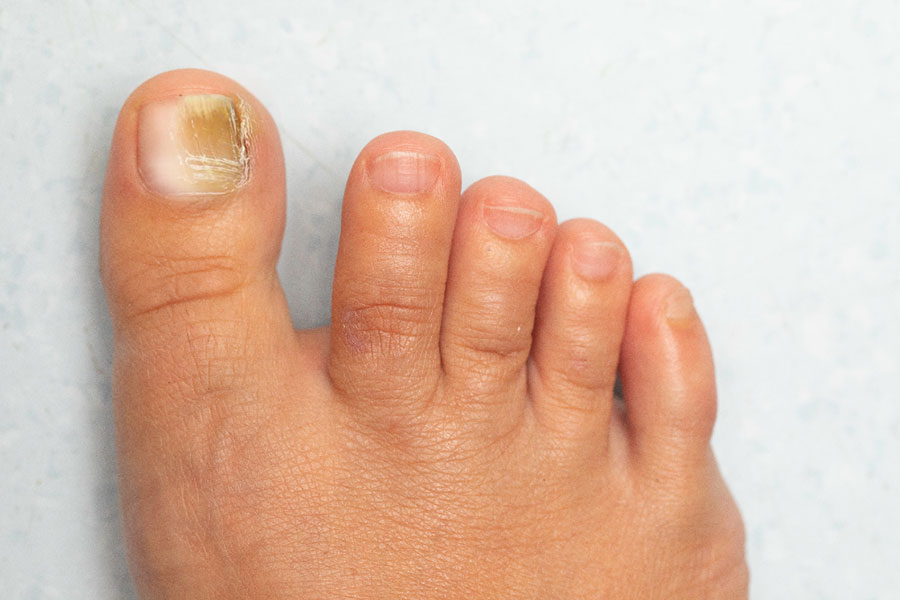
Thick, yellow, brittle, or discolored toenails are usually signs of a fungal nail infection (onychomycosis) — a common condition that rarely clears up on its own and often spreads to other nails if it’s left untreated. Over-the-counter products frequently fail because they can’t reach the infection under and inside the nail.
At Premier Lower Limb Clinic in Jersey City, Dr. Ibrahim Elkattawy diagnoses the cause, confirms it’s truly fungal, and builds an effective plan to restore clear, healthy nails.
Request an AppointmentSigns You May Have Toenail Fungus
- Thickened or crumbling nails
- Yellow, white, or brown discoloration
- Brittle or distorted nail shape
- Debris building up under the nail
- A foul odor
Why It Won’t Go Away on Its Own
Fungus lives in the warm, dark space under the nail, where creams and home remedies struggle to penetrate. Without treatment, the infection usually thickens the nail, spreads to neighboring toes, and can make walking or wearing shoes uncomfortable. Early, accurate treatment gives you the best chance of clearing it.
Patients with diabetes should also pay close attention to nail changes. Learn more about diabetic foot care and when to seek treatment.
How We Treat Toenail Fungus
Treatment is tailored to the severity of your infection and may include:
- Topical antifungal medication for milder cases
- Oral antifungal medication for more stubborn or widespread infections
- Professional nail debridement (thinning/trimming) to reduce thickness and help treatment work
- Guidance on footwear, hygiene, and prevention to stop reinfection
If nail pain is caused by a different condition, we also provide ingrown toenail treatment and comprehensive podiatry services.
Frequently Asked Questions
Will toenail fungus go away on its own?
Rarely. Fungal nail infections tend to persist and spread without treatment, so starting early gives the best results.
How long does it take to clear up?
Because you’re waiting for a healthy nail to grow out, full clearing usually takes several months. We’ll track your progress along the way.
Is toenail fungus treatment covered by insurance?
Many plans cover evaluation and treatment. We accept most major insurance and will review your benefits.
Can I catch it again after it’s treated?
Yes, reinfection is possible. We’ll give you simple steps for shoes, socks, and hygiene to lower the risk.
Are over-the-counter treatments enough?
They often aren’t, because they can’t reach the infection beneath the nail. A professional diagnosis ensures you’re treating the right problem the right way.
How do you know it’s actually fungus?
Other conditions can mimic fungus. Dr. Elkattawy confirms the diagnosis before treatment so you’re not wasting time on the wrong approach.
To learn more about the doctor providing your care, meet Dr. Elkattawy.
Request an Appointment



