
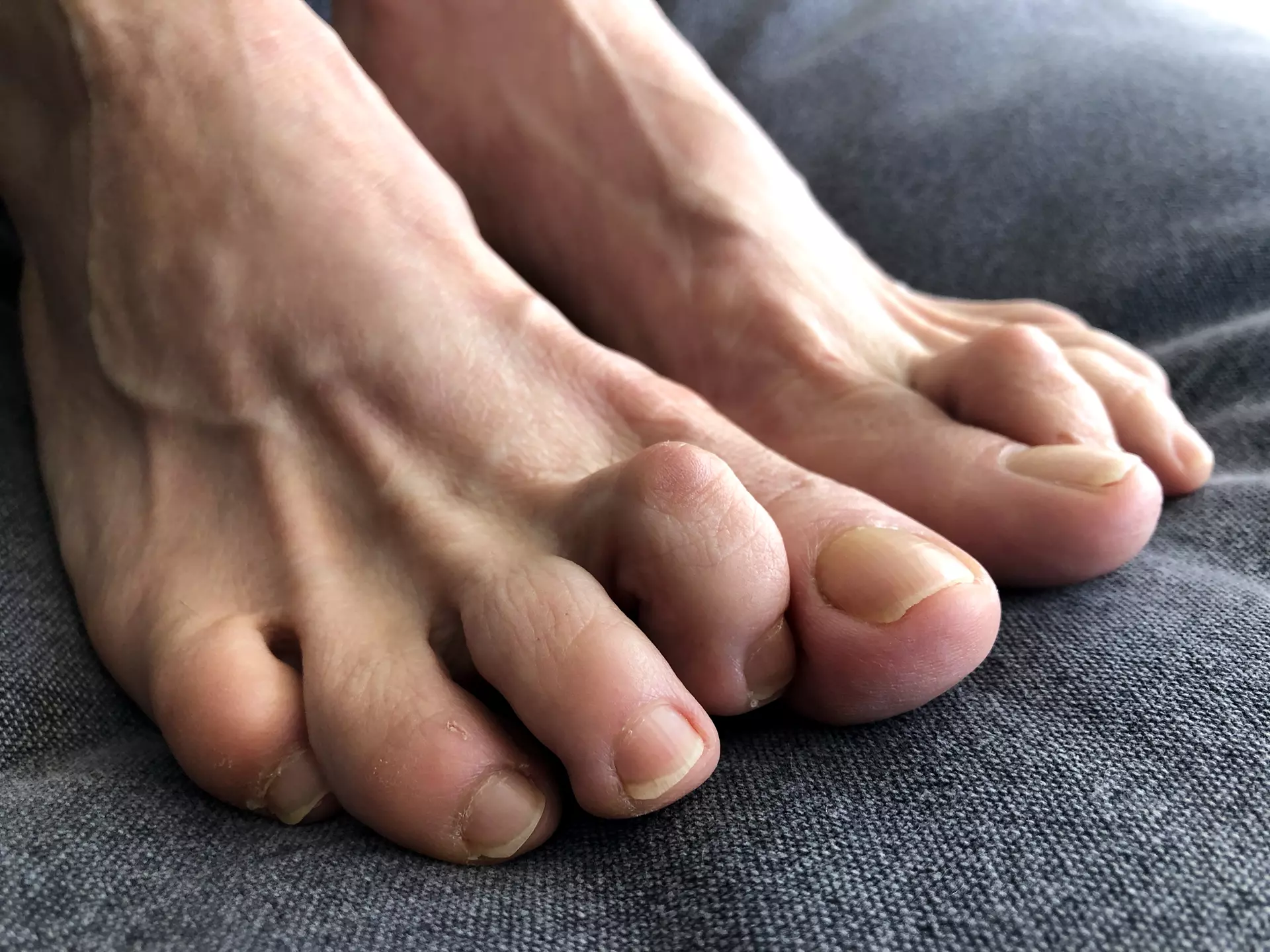
A hammertoe is a toe that bends abnormally at the middle joint, taking on a claw- or hammer-like shape. Early on it stays flexible, but over time it can become rigid, painful, and prone to corns and calluses where it rubs against your shoes.
At Premier Lower Limb Clinic in Jersey City, Dr. Ibrahim Elkattawy treats hammertoes at every stage — relieving pain conservatively when possible and offering surgical correction when the toe has become rigid or severely painful.
Request an AppointmentWhat Causes Hammertoes
Hammertoes develop from a muscle and tendon imbalance that pulls the toe out of alignment. Tight or pointed shoes, high heels, an inherited foot structure, bunions, and prior injury can all contribute. Caught early, the toe is still flexible and easier to manage; left alone, it tends to stiffen into a fixed position.
Conditions such as bunions can increase the likelihood of hammertoe development and should be addressed when present.
Symptoms
- A toe that bends downward at the middle joint
- Corns or calluses on top of or between the toes
- Pain or pressure when wearing shoes
- Difficulty straightening the toe as it becomes rigid
Recurring pressure points may also require corn and callus treatment.
Treatment Options
- Footwear changes and roomier toe boxes to reduce pressure
- Custom orthotics and padding to relieve symptoms and slow progression
- Splinting or taping for flexible hammertoes
- Surgical correction to straighten the toe when it’s rigid or painful
Frequently Asked Questions
Can a hammertoe be fixed without surgery?
While the toe is still flexible, footwear changes, padding, and orthotics can relieve pain and slow progression. Surgery is reserved for rigid or severely painful toes.
Will a hammertoe get worse over time?
It often does. Flexible hammertoes tend to stiffen into a fixed position, which is why earlier treatment usually means simpler care.
What is hammertoe surgery like?
Dr. Elkattawy corrects the alignment of the toe; the specific approach depends on whether the toe is flexible or rigid. He’ll explain recovery in detail beforehand.
Why do I keep getting corns on my hammertoe?
The raised joint rubs against your shoe, building up protective thick skin. Correcting the toe and relieving the pressure stops the cycle.
Is hammertoe surgery covered by insurance?
Medically necessary correction is typically covered. We accept most major plans and will review your benefits.
Can I be evaluated quickly?
Yes — same-day appointments and on-site X-rays let us assess the joint and give you a plan in one visit.




